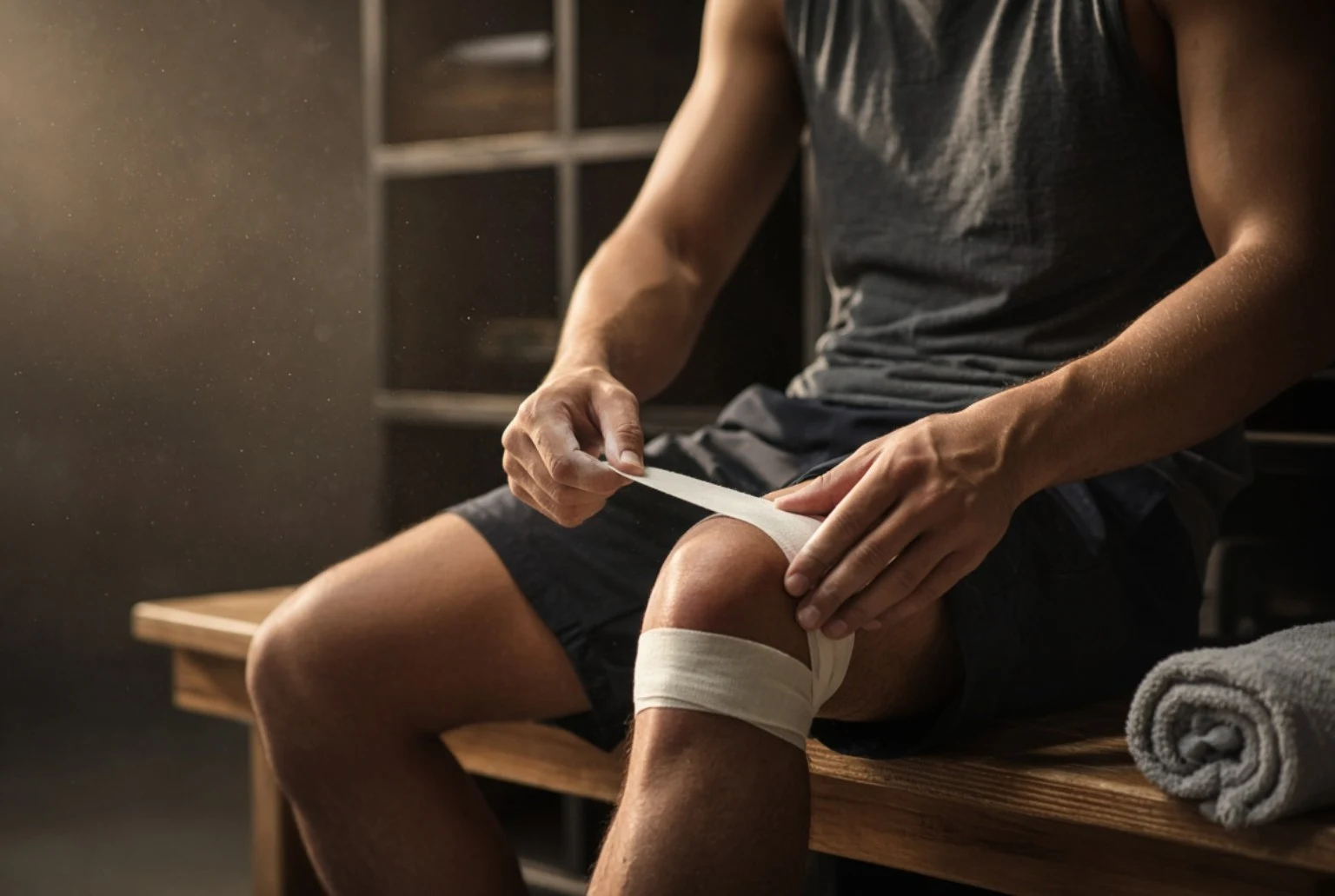
Tendons are the overachievers of the human body. A single Achilles tendon can handle forces several times your body weight with every stride you run. Yet when a tendon tears, it heals with frustrating slowness. The reason is simple: tendons and ligaments have a poor blood supply, so the raw materials for repair arrive in a trickle.
That single problem, tough tissue that heals slowly, explains why two peptides have become legends in gyms, training rooms, and online recovery forums. Their nickname comes from a famous comic-book hero whose superpower is healing almost instantly from any injury.
Meet the Wolverine Stack: BPC-157 and TB-500.
Part one: the peptide from stomach juice
Your stomach is one of the harshest places in your body. It bathes in acid strong enough to dissolve food, yet its lining survives, and repairs itself, every single day.
In the early 1990s, researchers at the University of Zagreb in Croatia, led by pharmacologist Predrag Sikirić, went looking for the secret. They studied a protein found in human gastric juice that seemed to protect tissue, and named it Body Protection Compound. From it, they isolated a stable 15-amino-acid fragment: BPC-157.
The "stable" part matters. Most peptides fall apart quickly in the gut. BPC-157 held together, which made it unusually easy to study. And when the Zagreb team began testing it beyond the stomach, the results got interesting.
What the tendon studies found
In a 2003 study, researchers surgically cut the Achilles tendons of rats. Untreated animals healed poorly. Rats given BPC-157 showed stronger tendons that could bear more load before failing, better walking function, more organized collagen, and smaller defects that eventually closed completely.
The findings kept stacking up. In rat studies, BPC-157 was linked to:
Tendon-to-bone healing after an Achilles tendon was detached entirely, even in animals given a corticosteroid known to slow healing
Ligament repair after the knee's medial collateral ligament was cut
Muscle recovery after a crush injury, with less swelling and bruising and a faster return to full function
Scientists in Taiwan then asked how. Working with tendon cells in the lab, they found BPC157 helped those cells migrate and spread out, the essential first step in closing a gap, and survive oxidative stress. A 2014 follow-up found it increased the number of growth hormone receptors on tendon cells, potentially making them more responsive to the body's own repair signals.
A 2019 review of the research summed it up: across a wide range of injury models, BPC157 consistently showed positive and prompt healing effects, with particular promise for slow-healing tissues like tendons and ligaments. Nearly all of that evidence comes from animals and cells, which is exactly why researchers are so eager to see more human studies.
Part two: the protein in almost every cell
TB-500's story starts with a much bigger molecule: thymosin beta-4.
The name is a historical accident. Allan Goldstein's research group first identified it while studying extracts of the thymus gland, so it was named for the thymus. But it turned out to be almost everywhere. Thymosin beta-4 sits inside nearly every cell in your body, often in large amounts.
Its day job is managing actin, the protein that forms a cell's internal skeleton and lets it change shape and move. Think of it as a dispatcher holding building materials in reserve until the cell needs to crawl somewhere.
That's why researchers described it as a protein that "moonlights" in tissue repair. When tissue is damaged, thymosin beta-4 is released into the wound, where it appears to help cells migrate in, encourage new blood vessels, and calm inflammation.
The animal results were striking:
Skin wounds: In a 1999 rat study, thymosin beta-4 applied to the skin or given by injection increased new skin coverage and wound contraction.
The heart: In a landmark 2004 paper in Nature, mice treated with thymosin beta-4 after a heart attack had more surviving heart-muscle cells and better heart function.
The eye: Thymosin beta-4 eye drops have advanced into human clinical trials for corneal healing, one of the furthest steps any repair peptide in this conversation has taken.
So what is TB-500, exactly?
Here's the surprising part. TB-500 isn't thymosin beta-4. It's a tiny piece of it.
It first surfaced as a veterinary product in the horse-racing world. When chemists analyzed it, they found the active ingredient was a seven-amino-acid fragment, LKKTETQ, the exact region of thymosin beta-4 that grabs actin and is linked to cell migration and wound healing.
The logic is elegant: if one small segment does the key work, why not use just that segment? The catch is that most of the published research was done with the full thymosin beta-4 protein. How closely the fragment mirrors the whole is one of the most interesting open questions in the field.
Why put them together?
This is where the Wolverine idea comes from. The two compounds appear to approach repair from different directions.
BPC-157's research story centers on blood-vessel growth, tissue protection, and making tendon cells more mobile and more responsive to growth signals. Thymosin beta-4's story centers on the cell's internal skeleton, cell movement, new blood vessels, and inflammation control.
Different roads to the same destination. Researchers studying combinations are asking a simple question: if two compounds work through separate pathways, could pairing them produce more complete repair than either alone?
It's a reasonable hypothesis, and so far mostly an untested one. The closest glimpse comes from a small 2021 clinic review of 16 people with knee pain. Most reported improvement, including three of the four who received both peptides. With no control group, it's an anecdote dressed in data, but it shows where curiosity is heading.
The bottom line
The Wolverine Stack captured the recovery world for a reason. BPC-157 has one of the deepest animal research records of any repair peptide, especially for tendons and ligaments. Thymosin beta-4 has been studied from skin to heart to eye, with human trials
on the board. Put a stomach-derived protector next to an ancient cellular dispatcher, and you get a pairing that's almost irresistible to study.
The takeaway
A protein from stomach juice and a fragment discovered in a racehorse product. Neither sounds like the stuff of superheroes. But in the lab, both keep showing up wherever the body is trying to rebuild, and that's a story worth following.
Next in PepJournal: KPV, the three-letter peptide asking a big scientific question.